Cargo Next
Next Generatıon cargo system to combine drone and conventional delivery
Duration
4 months
source
Bachelor's Project
Role
product Desıgner
tools
Fıgma
DELIVERABLES
Product concept
User Flow
high-fidelity UI
keywords
Design Brief
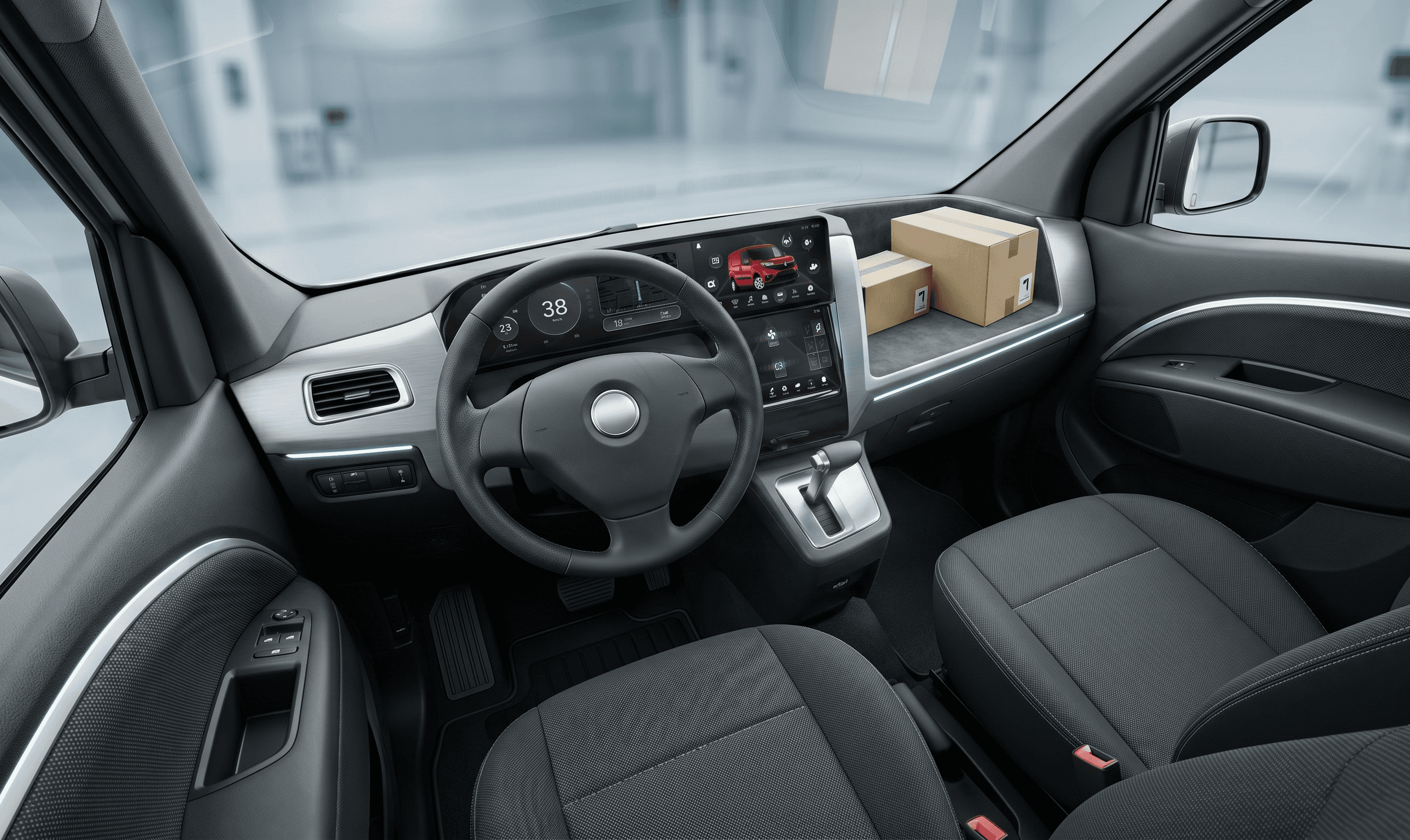
Cargo Next came to life as a collaboration with Fiat to explore the future of electric cargo vehicles. The brief was to design the cluster and head unit interfaces and the interaction concept for an electric light commercial vehicle launching six years ahead. The solution needed to address the physical and cognitive needs of cargo workers as well as their safety, while integrating upcoming technologies by the time it reached the road.
Solution
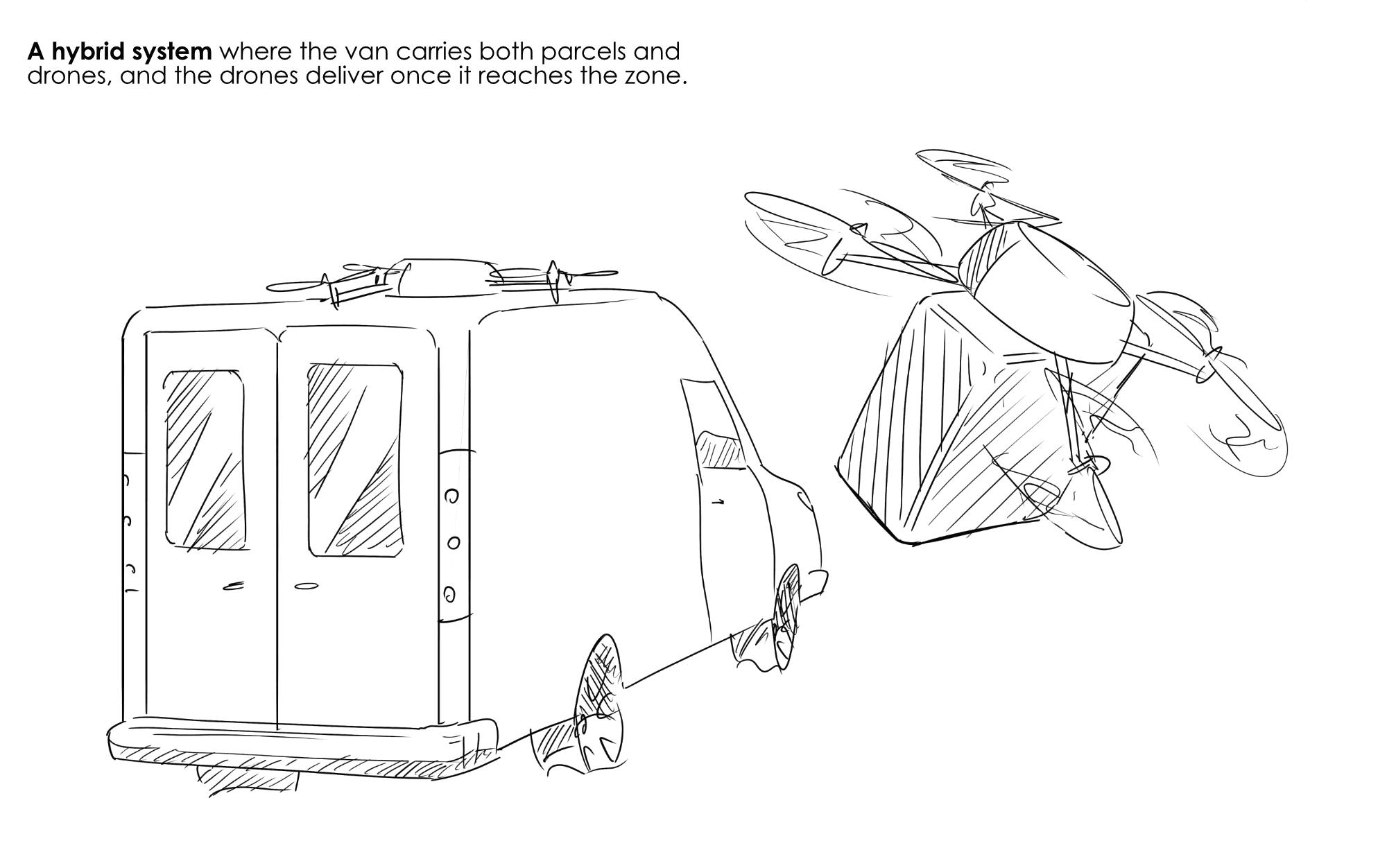
Cargo Next aims to make cargo delivery more efficient by creating a hybrid system that combines drone delivery with conventional distribution. In light of developing technologies, the final concept optimizes and reduces the workload on cargo workers, meets the interface needs of the future, and establishes a natural human-machine interaction.
product video
Process
As a semester-long project, it left room for thorough market analysis and hands-on field research. I shadowed cargo workers by accompanying them on their workdays and conducted interviews. I turned those observations into a user persona and mapped the needs and constraints of the user. Also, I explored which technologies were plausible within the six-year timeframe, so the concept could be innovative without becoming fictional.
After the research phase, I defined the concept of the delivery system and built the user story. I developed the information architecture and interaction flow, then worked through wireframes to establish the structure of the product. Once that was settled, I explored different visual languages and produced the final high-fidelity cluster and head unit screens. During the design phase, I also designed physical dashboard concepts to ensure a seamless experience, since such a vehicle interface cannot be separated from the physical space it functions in.
Research
I started by listing my knowledge gaps, then marked each one with the most appropriate data collection method to close them. I settled on three methods, secondary research (▲), shadowing (■) and interview (★).
Cargo delivery interfaces ▲ ■
Cargo vehicle interfaces ▲ ■
Cargo workers' daily working routine ★■
Problems cargo workers face that stem from the vehicle and UIs they use ★■
Logistics procedures carried out by cargo workers ▲ ★ ■
Applications cargo workers use to plan their route ▲
Competition in the cargo vehicle industry ▲
Current and future trends in automotive UX and UI ▲
Current and future capabilities of cargo vehicles ▲ ■
Other cargo delivery methods likely to emerge in seven to ten years ▲
Product Analysis ▲
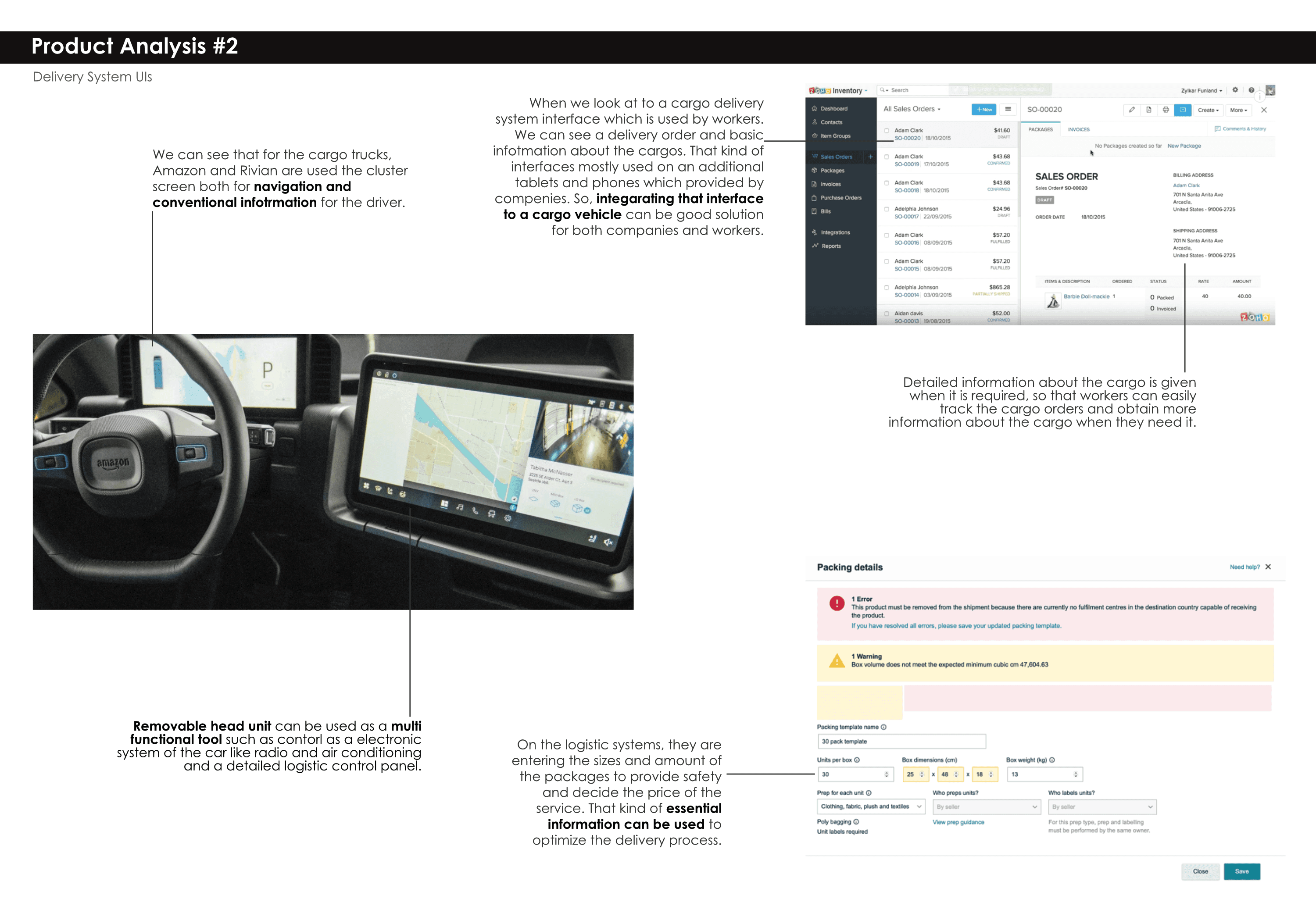
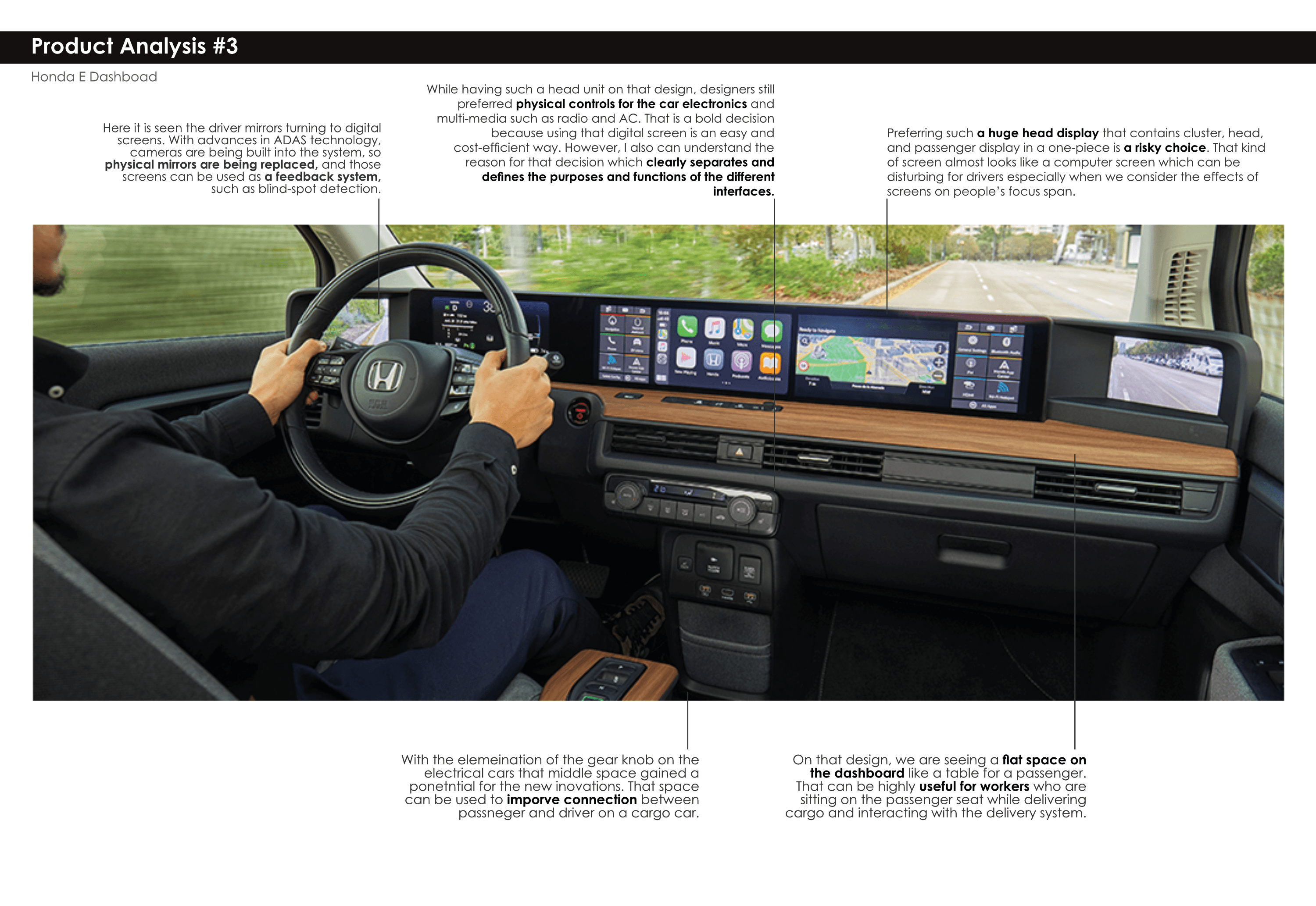
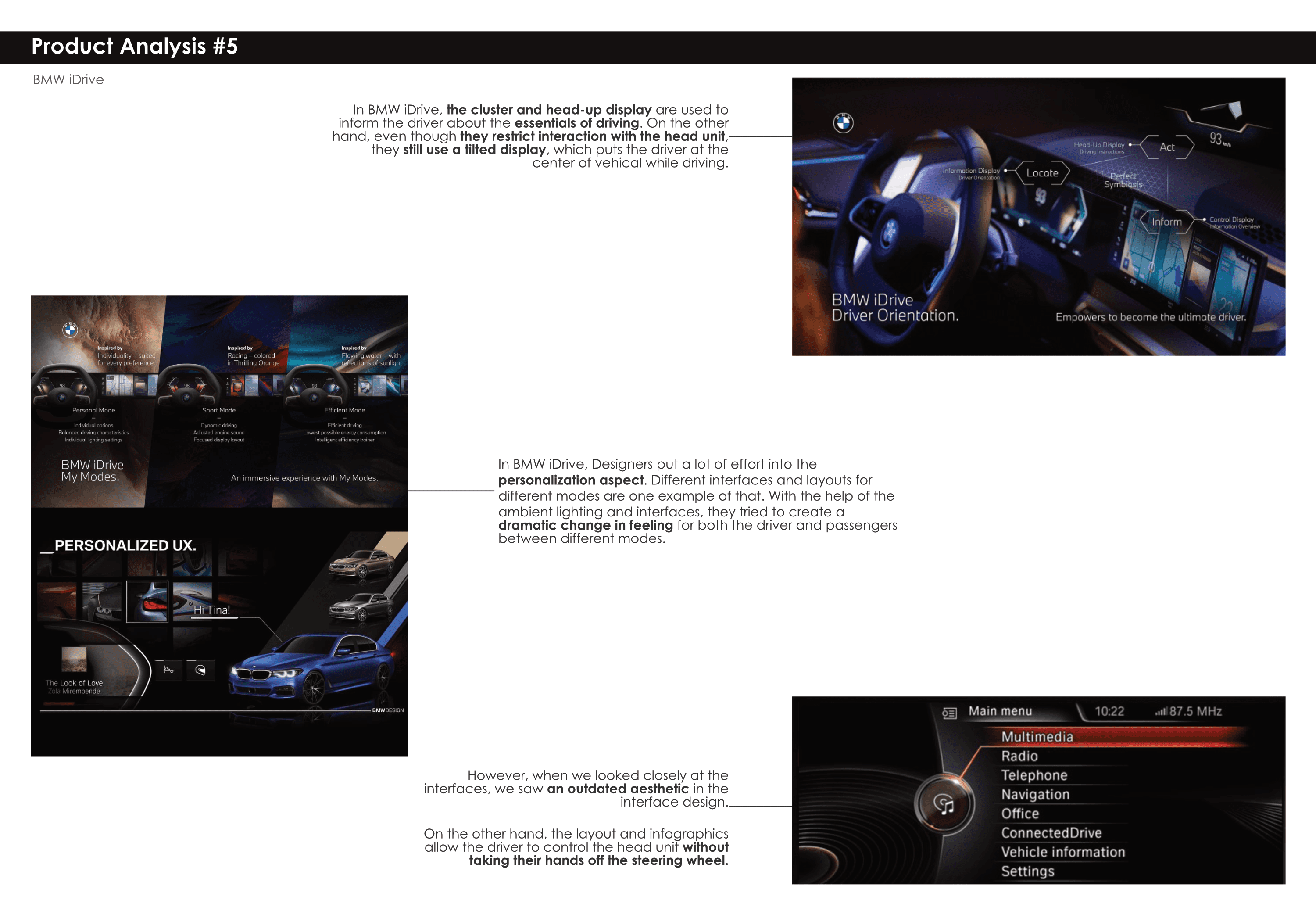
As secondary research, I made a product analysis to understand the overall trends and concepts emerging in the electric vehicle market and delivery systems, looking at both interface design and the physical dashboards. I studied a range of brands, applications and product groups to see how each one handled user interaction.



Field Research ★■
I spent a full working day shadowing two cargo workers and interviewed them afterwards. I kept the interview questions open-ended, so the answers could go somewhere I hadn't anticipated.
Can you describe one of your workdays?
Which activity takes up the longest part of your day?
Is there anything that slows you down during the process?
When you started in this role, which procedures or activities were hardest to get used to?
If you became a manager at your company, what would you change first about the work you do now?

I brought everything together into a user persona, drawn from the shadowing, the interviews, and the wider research on cargo workers.



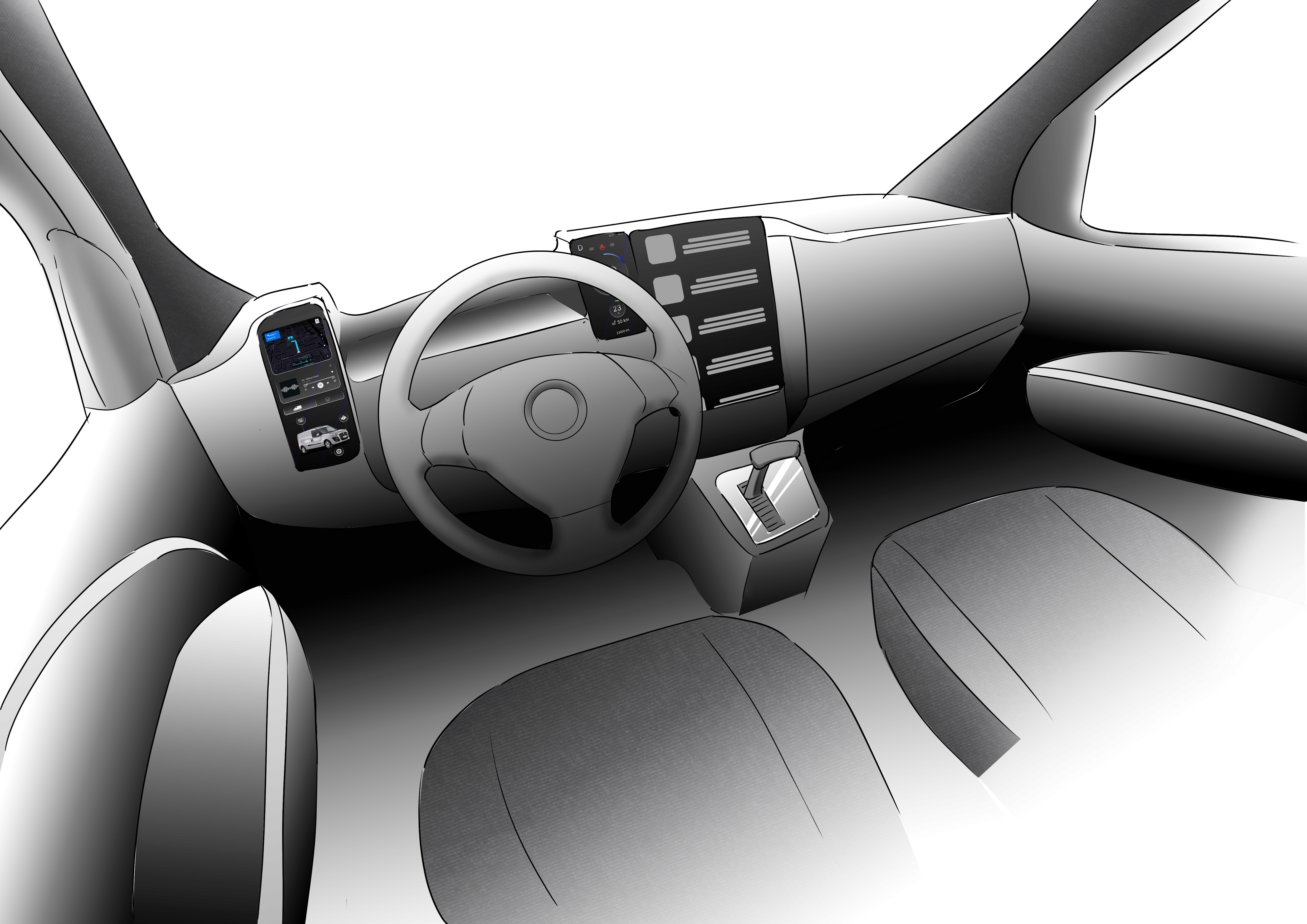
Concept A
The first concept places two small screens either side of the steering wheel, the cluster on the left and the head unit on the right, with a large delivery screen set into the middle of the dashboard. The delivery software lives inside the vehicle, so the cargo worker interacts with an integrated system.

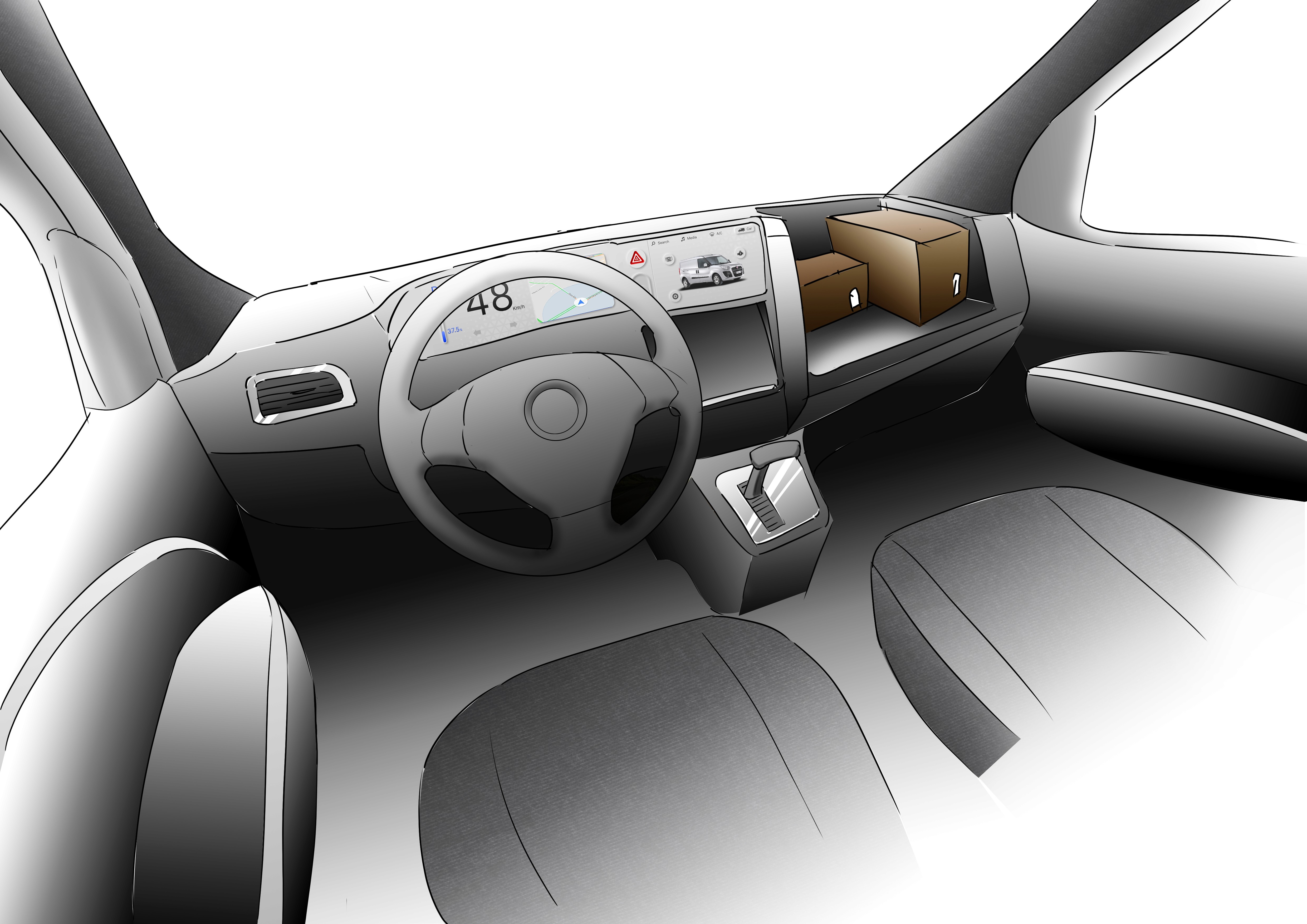
Concept B
The second keeps a conventional layout, with a compact cluster behind the wheel and the head unit to its right, and leaves a gap below for a detachable delivery unit. Here, the vehicle software and the delivery company's software stay separate, and the van provides only a mount and a charging port.

Experience Structure
System Map

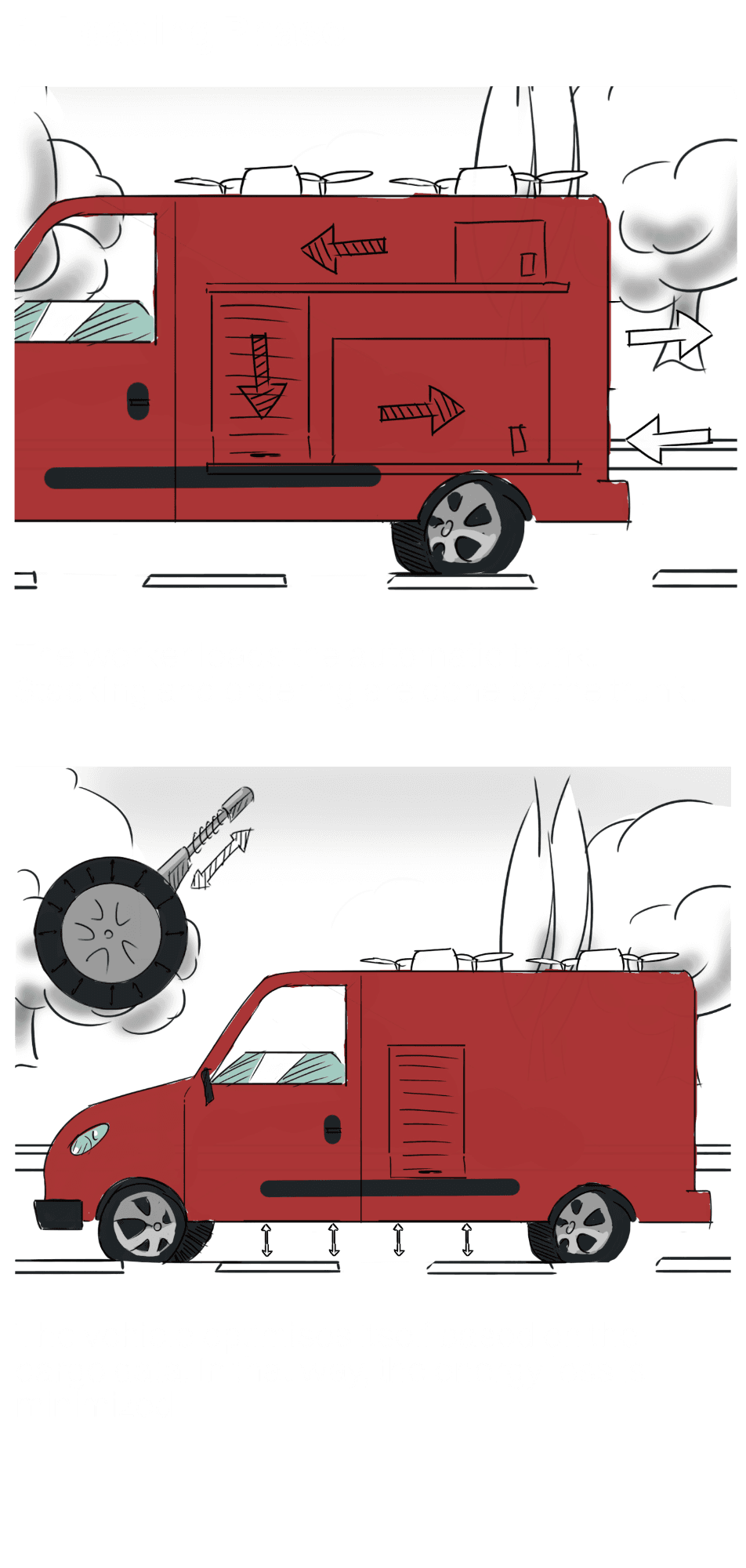
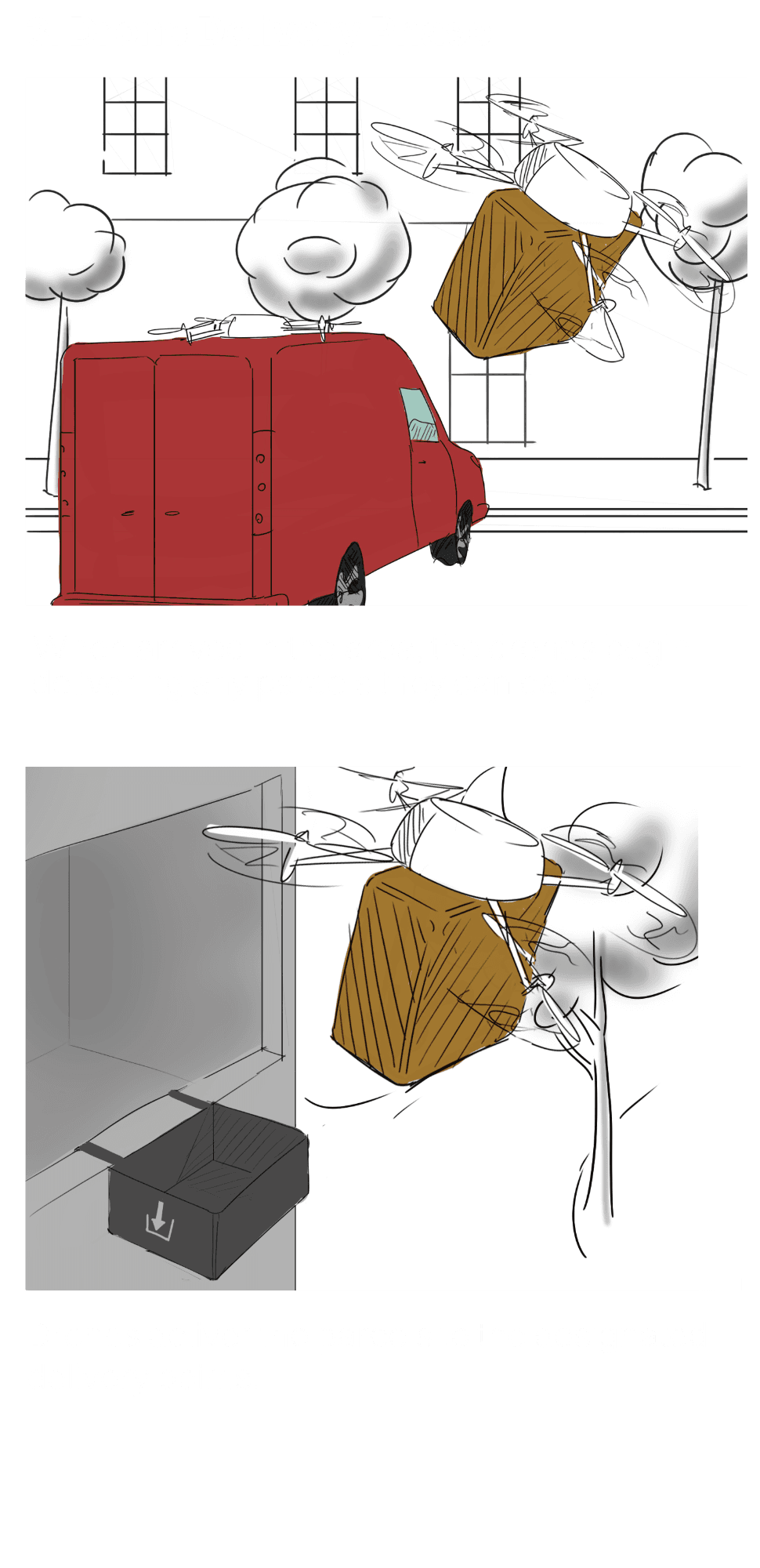
Storyboard



Information Architecture

User Flow

Fınal product
Home & Media
The home screen contains the most frequently used controls, along with critical information such as media controls, drone status and system notifications.
A/C
The climate controls are developed by considering the disadvantages of touchscreens, such as the lack of tactile feedback. To compensate, the interaction is designed to require no precision or extra attention while driving.
Car
On the car screen, users access the settings of various vehicle systems, such as engine, driving assist and sound, as well as delivery systems like the drone and automated trunk settings.
Drones
On the drones screen, the worker can track each drone's status, distance and estimated turnaround time. If a critical situation arises, a notification is sent to the worker so that both the equipment and the surroundings stay safe.
Navigation
Navigation is driven by the optimisation algorithm running in the background, which accounts for distance, load, and other external factors, while manual address entry remains available for anything unexpected.
Settings
On the settings screen, users can access and change the settings on the software side of the vehicle.
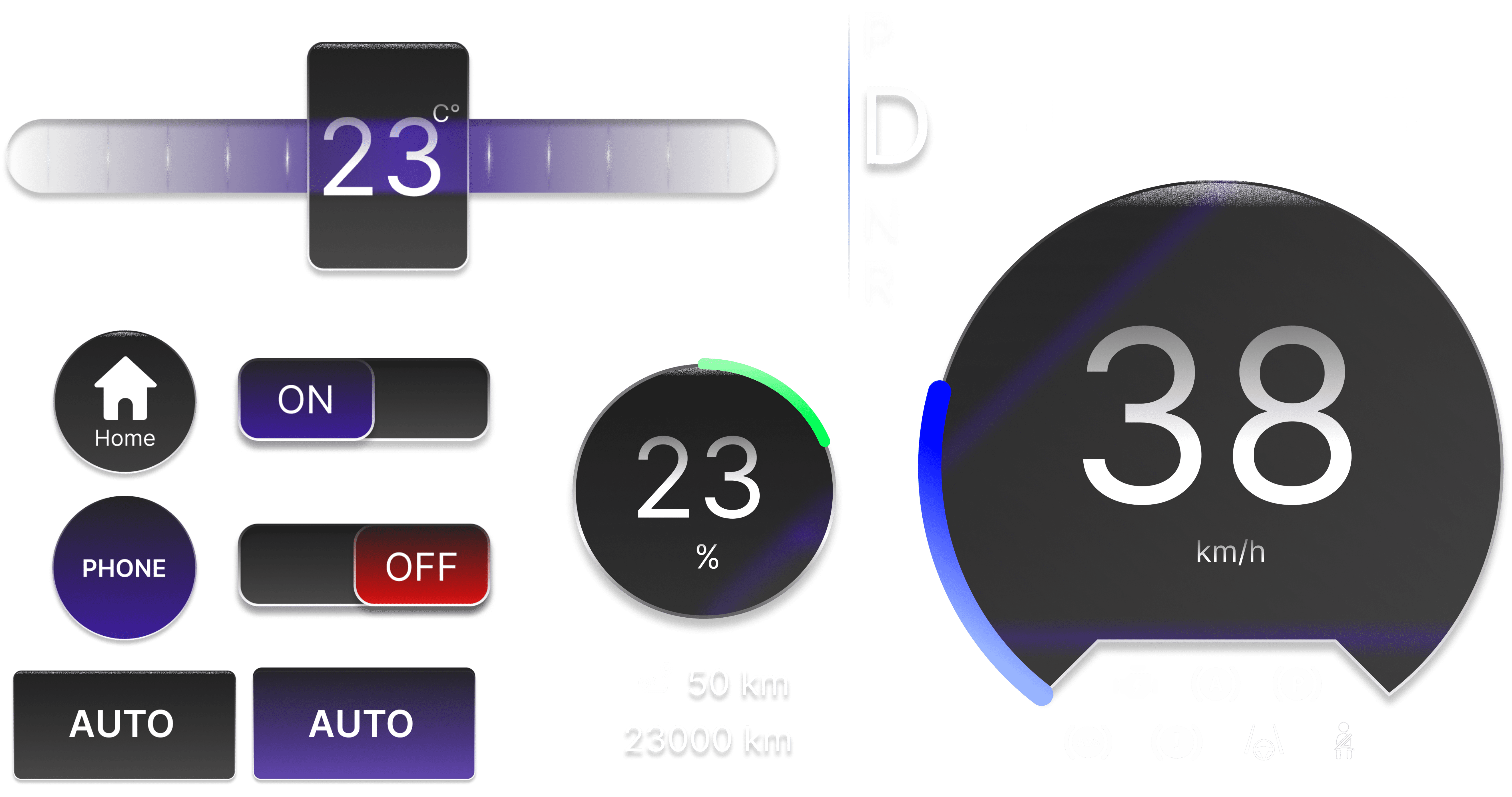
Visual Identity

Reflection
The mentoring I received through the Fiat collaboration kept the project grounded from concept to execution. The duration made comprehensive research possible, allowing for detailed market analysis alongside real field research. All of that turned the concept into a product that meets real user and technical requirements.
The most valuable thing I took from this project is that whether a product is digital or physical, the physical boundaries it exists in set the requirements, defining its function and design. The climate controls is one example. Market analysis showed manufacturers moving nearly every control onto touchscreens for reasons of feasibility and cost. On the usability side, however, touchscreens remove tactile feedback and demand extra precision, so this kind of tension calls for solutions that answer both sides at once.
Designing for the future was another challenge. I tried to keep the concept innovative yet credible, reaching for ideas that did not yet exist without drifting into speculation.